
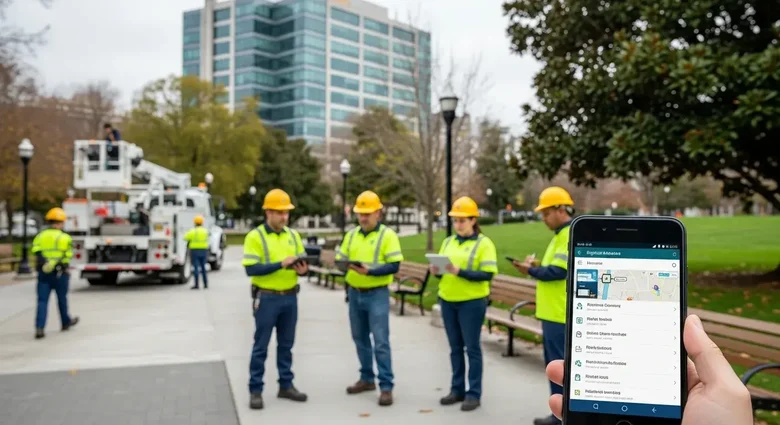
Transforming Asset Management with Mobile Technology

Transforming Asset Management with Mobile Technology
What is Mobile Technology in Asset Management?
Mobile technology in asset management refers to the use of mobile devices and applications to manage and track assets. This paradigm shift has significantly altered how public agencies interact with their assets, enhancing not only the efficiency of operations but also the effectiveness of field inspections and compliance processes. By equipping field crews with mobile applications, agencies can streamline workflows, ensure timely inspections, and maintain comprehensive records with ease. This technological integration is imperative for public sector organizations aiming to optimize their mobile asset management strategies amid increasing demands for transparency and accountability.
Why Use Mobile Technology in Asset Management?
Using mobile technology in asset management enhances operational efficiency and allows for real-time data access. In an environment where public agencies are often burdened by inefficient maintenance practices—costing an average of $1.3 million annually—the necessity for more efficient systems becomes evident. Mobile applications facilitate offline data capture, enabling field crews to continue their work even in remote areas devoid of internet connectivity. This capability ensures that data is collected consistently and allows for immediate synchronization upon re-establishing a connection. As agencies increasingly adopt mobile solutions, the potential for improved workflow efficiency becomes apparent, leading to more responsive and accountable service delivery.
Key Benefits of Mobile Technology for Asset Managers
The key benefits include improved communication, faster decision-making, and increased productivity. Mobile technologies foster real-time communication between field crews and management, reducing delays in information exchange and enhancing collaborative efforts. For example, field inspectors can instantly report issues, upload images, and receive directives, all from their mobile devices. This immediacy leads to faster decision-making processes, as managers can quickly assess situations and allocate resources accordingly.
Moreover, mobile technology significantly boosts productivity by standardizing processes across departments. When agencies implement uniform protocols through mobile apps, training time is drastically reduced, and employees can more easily familiarize themselves with the system. This standardization promotes data visibility and consistency, enabling agencies to make informed decisions based on reliable information.
Real-World Case Studies
To illustrate these benefits, consider a public agency that recently integrated a mobile asset management solution. The agency reported a 30% reduction in inspection times and a notable decrease in compliance-related violations. By employing mobile technology, inspectors could easily access asset history, review compliance requirements, and document findings directly in the field.
Another agency implemented a mobile application that allowed field crews to report maintenance issues instantaneously. This led to a 25% improvement in response time to asset repairs, significantly enhancing service delivery to the community.
Challenges of Implementing Mobile Technology
Implementing mobile technology can pose challenges such as security risks and integration with existing systems. Although the advantages are manifold, public agencies must navigate potential pitfalls that can hinder the successful deployment of mobile solutions. Security risks remain a primary concern, particularly when sensitive data is transmitted over mobile networks. Agencies must invest in robust security measures, including encryption and user authentication, to safeguard their assets and information.
Furthermore, the integration of mobile applications with existing asset management systems can be complex. Many agencies rely on legacy systems that may not be compatible with newer technologies. This lack of interoperability can create silos of information and complicate data synchronization efforts. It is essential for agencies to prioritize a comprehensive evaluation of their current systems to identify any potential barriers to integration before adopting mobile solutions.
Insights into Training and Onboarding
Another challenge is the training and onboarding process for new users of mobile applications. Effective training programs are crucial for ensuring that field crews can effectively utilize mobile tools. Agencies should consider leveraging hands-on training sessions, supplemented by user-friendly manuals and online tutorials, to equip their personnel with the necessary skills. Feedback mechanisms can also help identify areas where additional training may be required, ensuring that employees feel confident and competent in using mobile technology.
Future Trends in Mobile Technology for Asset Management
Future trends indicate a shift towards AI integration and enhanced analytics capabilities in mobile asset management solutions. As public agencies continue to adopt mobile technologies, the incorporation of artificial intelligence (AI) is poised to revolutionize asset management processes. AI can facilitate predictive maintenance by analyzing historical data to forecast potential asset failures, allowing agencies to proactively address issues before they escalate.
Moreover, advancements in analytics capabilities will enable agencies to glean deeper insights from field data. By harnessing big data analytics, public agencies can identify patterns and trends that inform strategic decision-making and resource allocation. This evolution will not only improve operational efficiency but also bolster compliance and safety in field inspections.
Community Engagement and Environmental Monitoring
Beyond asset management, mobile technology holds implications for emergency response, community engagement, and environmental monitoring. For instance, public agencies can utilize mobile applications to engage communities more effectively, allowing citizens to report issues or provide feedback in real-time. This fosters a sense of community involvement and enhances transparency in public service.
In terms of environmental monitoring, mobile technology can assist agencies in tracking environmental changes and compliance with regulations. Field crews equipped with mobile devices can collect data on air quality, water quality, and other environmental metrics, contributing to more informed decision-making and policies.
Conclusion
The integration of mobile technology into asset management represents a significant advancement for public agencies seeking to modernize their operations. The benefits of enhanced workflow efficiency, improved communication, and real-time data access are compelling reasons for agencies to embrace this transformation. While challenges such as security risks and integration complexities exist, proactive measures and comprehensive training can mitigate these obstacles.
As mobile technology continues to evolve, public agencies must remain agile, adapting to future trends such as AI integration and advanced analytics. By doing so, they will not only improve asset management practices but also enhance overall service delivery to the communities they serve.
Call to Action
Public agency managers, asset management professionals, and field crew supervisors are encouraged to explore the implementation of mobile technologies within their organizations. By investing in these innovations, agencies can achieve greater operational efficiency, compliance, and community engagement, ultimately leading to improved public service outcomes.
Related Posts

Data Mission Press Release

Enhancing Public Sector Cybersecurity for Local Governments
